Rolfing History
The history of Rolfing can be traced back to the pioneering work of Dr. Ida Rolf in the mid-20th century. Dr. Rolf, a biochemist and practitioner of alternative medicine, developed a unique approach to bodywork that aimed to improve the body's structure and alignment. This approach, known as Rolfing or Structural Integration, has since gained recognition as a transformative modality in the field of bodywork.
Dr. Rolf began developing her ideas in the 1920s and 1930s, drawing inspiration from various disciplines such as osteopathy, yoga, and the study of fascia. She believed that by addressing the body's connective tissues, particularly the fascia, she could bring about significant changes in an individual's posture, movement, and overall well-being.
In the 1940s, Dr. Rolf began teaching her method and sharing her knowledge with other practitioners. She coined the term "Structural Integration" to describe her approach, emphasizing the goal of aligning and integrating the body's structures. Her teachings expanded throughout the 1950s and 1960s, gaining recognition among bodywork professionals and individuals seeking a holistic approach to healing.
The name "Rolfing" itself originated from the students of Dr. Rolf, who affectionately named the technique after their teacher. The term became widely used to refer to the Structural Integration work developed by Dr. Rolf.
Over the years, Rolfing has continued to evolve and grow as practitioners have expanded upon Dr. Rolf's teachings. Rolfers, as they are often called, have incorporated their own unique perspectives and techniques into the practice. This has led to a rich and diverse community of Rolfing practitioners who offer their expertise to clients seeking enhanced alignment, improved posture, and greater overall well-being.
Today, Rolfing is recognized as an effective approach to bodywork and is practiced around the world. Its influence extends beyond the field of massage therapy, with many professionals in various movement disciplines and body-oriented therapies incorporating Rolfing principles into their work.
The history of Rolfing is a testament to the visionary work of Dr. Ida Rolf and the ongoing dedication of Rolfers to continue her legacy. As a result, individuals in the Greater Salt Lake and Northern Utah County areas, like those served by Lauren, can benefit from this transformative approach to bodywork that seeks to align, integrate, and optimize the body's structure and function.
Services
Massage
One massage does not fit all. With your input, we create a personalized massage session that addresses your specific needs.Learn More

Rolfing ®
Rolfing Structural Integration is a 10 session series of deep bodywork that works by way of the fascia tissue, to release chronic, stored structural aberrations, and effectively realign the entire body.Learn More
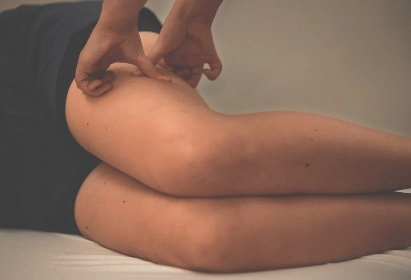
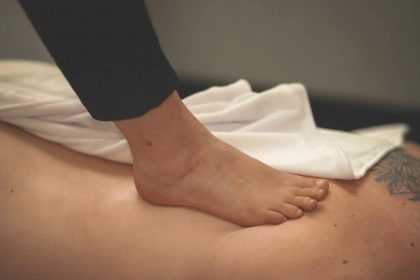
Ashiatsu
Ashiatsu is a barefoot massage technique in which the therapist delivers deep, broad, consistent pressure while utilizing their feet and body weight.Learn More
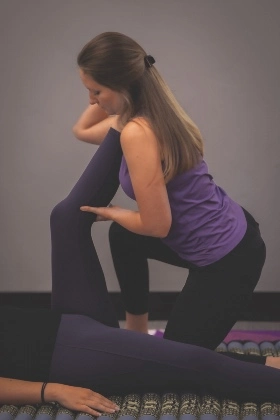
Thai Massage
Traditional Thai Massage guides the body, mind, and spirit into harmony and balance, promoting self-healing. The treatment helps to tone the body, strengthen joints, including chronic joint problems.Learn More
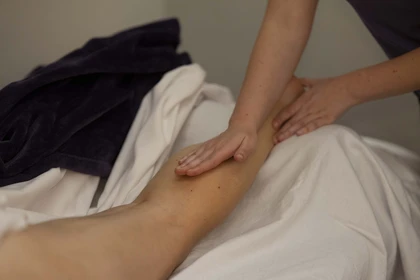
Lymphatic Massage
Structural Integration is a 10 session series of deep bodywork that works by way of the fascia tissue, to release chronic, stored structural aberrations, and effectively realign the entire body.Learn More
"I've had serious spinal issues for over 20 years, including a fusion over 10 years ago, which has caused me to see many massage therapists. I've never had a go-to therapist before Lauren. However, I haven't gone to anyone else in the last few years since she started working on me.
Lauren is a great combination of professional, talented, and intuitive. She works hard to cultivate her craft. She's consistently curious about human anatomy and how to improve her knowledge and skills as a therapist.
This is not just a job for Lauren. She genuinely wants to help people improve their lives and is sincerely empathetic to the needs of her clients. Her work has been immensely beneficial to my life."
Contact
Send me a message before your appointment and I'll get back to you as soon as possible.
- Studio address
- 11728 3600 W, Suite B
South Jordan, UT, 84095
FAQs
- What is your late or cancellation policy?
- If you are running late please let me know as soon as possible. If you are going to be more than 30 minutes late it will affect the length of your session. Full payment for your scheduled service will be expected. I require 24 hrs notice if you need to cancel your appointment so I can move someone from my waitlist to your spot. Less than 24 hours notice and you will need to pay 50% of the initial cost.
- What does “dress down completely” mean?
- Dress down to your comfort level means exactly that, your comfort level. I always say “the more you take off, the more I can work.” But I can just as easily work over clothes or sheets too if you prefer. You will always be completely covered and safe by the drape (by law) and I provide only ethical, therapeutic massage. I have a zero tolerance policy for any sexual advances or innuendo, and inappropriate touching is grounds for immediate termination of your session, still to be paid in full.
- Why am I sore after a massage?
- Usually this means you haven't had enough water in the days around your massage. Sometimes it can mean I worked too fast or too deep. If this is the case please let me know and I will do my best to rectify things. Other things that can help post massage soreness are icing the area (not directly on the skin and no more than 20 minutes at a time), epsom salt baths or going for a gentle walk.
- What are your prices?
- My hourly rate for all modalities is $100. Rolfing®️ sessions are $120 and a 90 minute hands on message is $140. First responders, active military, and their immediate families get 20% off.
- What's the difference between massage therapy and structural integration?
- Massage therapy is recommended once a month as preventative care. It can range from very relaxing to more injury rehab type work. It's most beneficial for the lymphatic and muscle systems. Structural Integration is a 10 step process done over 3 months where a different part of the body is addressed in each session. It is done in viewing clothes, without product and there is a lot more interaction on the client's part. It mainly targets the fascial system.
- What is your gratuity policy?
- Tips are always appreciated but referrals are better!
Directions
I’m in the same building as Finsand Chiropractic at The District in South Jordan. The address is 11728 S 3600 W. You’ll want to come in the door on the south side of the building with my name on it. My office is downstairs at the end of the hall on the right, Suite B. See you soon!